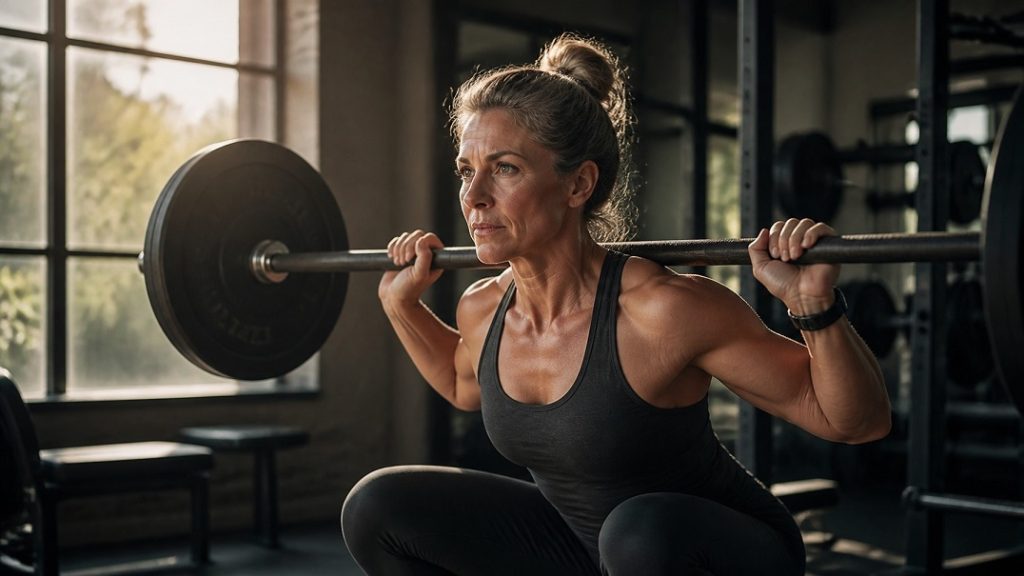
Walking gets recommended for almost everything, and for good reason, but when it comes to bone density specifically, not all exercise pulls its weight equally. Some activities send a strong signal to your bones to hold onto density. Others, despite being genuinely good for your heart and joints, do very little for bone.
Knowing the difference matters more in midlife than at almost any other stage, since this is when bone loss tends to accelerate. Here is what the research actually supports.
Key Takeaways
- Bone responds to mechanical load, so weight-bearing and resistance exercise build and preserve density in a way that non-impact cardio like swimming or cycling generally does not.
- Higher-intensity resistance and impact training has shown some of the strongest results in postmenopausal women, and research suggests it is safer than once assumed, even for women with low bone mass.
- Consistency and progressive challenge matter more than any single “perfect” workout, and pairing exercise with balance training helps address fracture risk from falls, not just bone density itself.
Why Bone Needs Mechanical Load to Stay Strong
Bone tissue responds to the forces placed on it. When muscles contract and pull against bone during resistance training, or when your skeleton absorbs impact during activities like jogging or jumping, that mechanical stress triggers bone-forming cells to lay down new tissue and maintain density. Activities that do not load the skeleton against gravity or resistance, however beneficial otherwise, do not send that same signal.
This is why swimming and cycling, while excellent for cardiovascular fitness, are not considered strong bone-building exercises on their own. The water supports your body weight in swimming, and cycling involves relatively low-impact, repetitive motion without much resistance load on the skeleton.
What the Research Shows Works
Resistance Training
A 2025 meta-analysis of 17 randomized controlled trials in postmenopausal women found resistance training produced statistically significant improvements in bone mineral density at the lumbar spine, femoral neck, total hip, and trochanter. The effect held up across different training protocols, though the analysis noted meaningful variation between studies in how the programs were structured.

High-Intensity Resistance and Impact Training
One of the more influential studies in this space, the LIFTMOR trial, challenged older assumptions about what women with low bone mass could safely do. Researchers put postmenopausal women with osteopenia or osteoporosis through 8 months of twice-weekly, supervised high-intensity resistance and impact training, using barbell-based exercises at roughly 80 to 85% of one-repetition maximum alongside jumping-based impact drills. The women in this program showed meaningful improvements in bone density at the spine and hip, along with better physical function, and the researchers reported the approach was safe and well tolerated, without the fracture risk that had long been assumed for heavier lifting in this population.
This is a meaningful, if sometimes underappreciated, shift in how bone health experts think about exercise for this population. For decades, the standard advice for women with low bone mass leaned cautious, favoring gentle movement and avoiding heavier resistance work out of concern for fracture risk. The newer trial evidence suggests that supervised, appropriately progressed heavy resistance training is not just safe for many women in this category, it may be more effective than lighter approaches.
Walking and Other Moderate Weight-Bearing Activity
Walking is weight-bearing, since it requires your skeleton to support your body weight against gravity, and it is associated with modest bone benefits. A meta-analysis of ground and joint reaction force exercise in postmenopausal women found small but statistically significant improvements in bone density at the femoral neck and lumbar spine from this category of activity, which includes walking. The effect size was modest compared with resistance training, which is worth knowing if walking is currently your primary form of exercise. It is a solid foundation, but adding resistance work builds on it rather than duplicates it.
| Activity Type | Bone Benefit | Notes |
|---|---|---|
| Resistance training | Strong | Effective across multiple studied protocols |
| High-intensity impact + resistance | Strong | Best studied with supervision; not a DIY starting point for high fracture risk |
| Brisk walking | Modest | Good foundation; pair with resistance work for greater effect |
| Swimming, cycling | Minimal for bone | Still valuable for heart health and joints |
Balance and Fall Prevention Matter Too
Bone density is only half of fracture risk; the other half is whether you fall in the first place. A large systematic review covering more than 25,000 older adults found that balance and functional exercise reduced fall rates by roughly a quarter, with multimodal programs combining balance and resistance work performing even better. Building a bone routine that includes some balance-focused movement, not just strength work, addresses both sides of the fracture equation.
Getting Started Safely
If you already have diagnosed osteopenia or osteoporosis, or you have not exercised regularly in a while, working with a physical therapist or trainer experienced in bone health for an initial assessment is a reasonable first step rather than an unnecessary one, particularly before attempting higher-intensity impact work. For most women without a diagnosed bone condition, starting with two to three sessions per week of resistance training, working up in weight over time, alongside regular walking, is a sound and well-supported place to begin.
Frequently Asked Questions
Is Walking Enough to Protect My Bones?
Walking offers real but modest bone benefits and is a good foundation, especially if you are currently inactive. For a stronger effect, research suggests pairing it with resistance training rather than relying on walking alone.
Is Heavy Lifting Safe If I Already Have Low Bone Density?
Research including the LIFTMOR trial suggests supervised, appropriately progressed heavy resistance training is safe and effective for many women with osteopenia or osteoporosis, which is a shift from older, more cautious advice. That said, an initial assessment with a knowledgeable professional is a sensible starting point if you have a diagnosed bone condition.
How Often Should I Do Resistance Training for Bone Health?
Most of the research showing meaningful bone density improvements used two supervised sessions per week over many months, which is a reasonable frequency target for most women to work toward, building up intensity gradually rather than starting at a high level immediately.
Selected Sources
- Exercise for Postmenopausal Bone Health, Can We Raise the Bar? (PMC)
- Optimal Resistance Training Parameters for Improving Bone Mineral Density in Postmenopausal Women (Journal of Orthopaedic Surgery and Research)
- Effects of Ground and Joint Reaction Force Exercise on Bone Mineral Density (PMC)
This article is for general educational purposes and is not a substitute for personalized medical advice. Talk with a qualified healthcare provider or physical therapist before starting a new exercise program, especially if you have diagnosed osteopenia, osteoporosis, or a history of fractures.