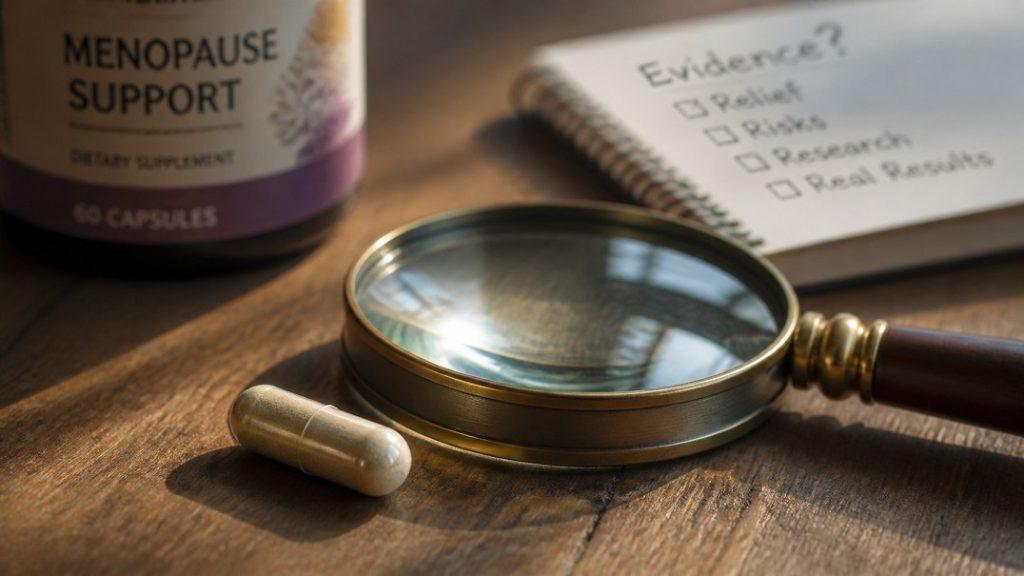
This is a site that talks about supplements often, so it owes you a straight answer to this question rather than a marketing one. The honest answer is more complicated than “yes” or “no,” and it depends heavily on what specific symptom you’re asking about and what you mean by “help.”
The short version: current medical guidelines do not recommend dietary supplements as a treatment for hot flashes and night sweats specifically. But that is not the whole picture, and it is worth understanding why, along with where supplements genuinely do have a role.
Key Takeaways
- The North American Menopause Society’s 2023 position statement explicitly does not recommend dietary supplements or herbal remedies for treating hot flashes and night sweats, based on Level I and II evidence.
- Hormone therapy remains the most effective evidence-based treatment for these specific symptoms.
- This does not mean all supplements are useless. Correcting a genuine nutrient deficiency, or supporting bone density, sleep, or general nutrition, are different questions with different evidence bases.
- Black cohosh, one of the most popular menopause herbs, has genuinely mixed research and a real, if rare, liver safety concern worth knowing about.
What the Official Guidance Actually Says
This is worth stating plainly rather than burying it. In its most recent comprehensive review of non-hormone treatments, The North American Menopause Society evaluated the evidence for a wide range of options for hot flashes and night sweats, technically called vasomotor symptoms, or VMS. Supplements and herbal remedies fell into the “not recommended” category, based on Level I and II evidence, the same evidence tier used to evaluate prescription treatments. Separately, the Society’s position statement concluded that hormone therapy remains the most effective treatment for these particular symptoms and should be considered by menopausal women within 10 years of their final menstrual period, for those without contraindications.
Why This Conclusion Exists
This is not because researchers haven’t looked. Supplements for menopause symptoms have been studied extensively, including black cohosh, evening primrose oil, vitamin E, soy isoflavones, and many others. The consistent finding across systematic reviews is that trial results are inconsistent, effect sizes are small when present at all, and study quality is often limited by small sample sizes and high placebo response rates in this specific symptom area, which commonly range from 20 to 66 percent.
Black Cohosh: A Closer Look at the Most Popular Option
Black cohosh deserves specific attention since it is probably the most widely marketed menopause herb. A Cochrane systematic review of six randomized controlled trials, involving 1,163 women, concluded that the evidence for black cohosh’s effectiveness was not fully conclusive, and a broader review of 16 studies found insufficient evidence to support its efficacy for early menopausal symptoms.
The Safety Question
Beyond effectiveness, there is a real, if uncommon, safety concern worth knowing about. There have been case reports of significant liver injury in people taking black cohosh, and while a definitive causal link has not been proven, the signal is real enough that it should factor into any decision about using it, independent of whether it works.

Where Supplements Do Have a Legitimate Role
None of this means supplements are pointless during this life stage, it means the honest use case is narrower and different than “cures hot flashes.”
Correcting Documented Deficiencies
If a blood test shows you are genuinely low in a specific nutrient, iron, vitamin D, or zinc, for example, correcting that deficiency has real, well-established evidence behind it, separate from any claim about menopause symptoms specifically. This is a fundamentally different question than “does this supplement cure hot flashes,” and the evidence supporting it is much stronger.
Bone Density and Structural Support
Calcium and vitamin D have a genuinely different evidence profile than herbal remedies for hot flashes, with solid research support for bone health specifically, an area where menopause does create real, measurable risk.
Sleep and General Nutritional Support
Nutrients like magnesium have more mixed but promising evidence for sleep quality specifically, which is a different symptom category than vasomotor symptoms and has been evaluated somewhat separately in the research.
| Use Case | Evidence Quality |
|---|---|
| Supplements as a treatment for hot flashes/night sweats | Not recommended by NAMS, Level I-II evidence |
| Correcting a documented nutrient deficiency | Strong, well-established |
| Calcium/vitamin D for bone density support | Solid, separate evidence base |
| Black cohosh for hot flashes | Inconsistent, plus a real liver safety signal |
| Hormone therapy for hot flashes | Most effective treatment per current guidelines |
What This Means for How to Think About Supplements Here
We think the honest position is this: supplements are not a substitute for hormone therapy if vasomotor symptoms are your primary concern and you are a good candidate for HRT, and that conversation belongs with your doctor. Where supplements can play a legitimate, well-evidenced role is in closing specific nutritional gaps and supporting broader health goals, bone density, sleep quality, general nutrition, that matter throughout this life stage regardless of whether they touch hot flashes directly.
Frequently Asked Questions
Should I Stop Taking Supplements If They Don’t Cure Hot Flashes?
Not necessarily. If a supplement is addressing a documented deficiency or supporting a specific goal like bone density or sleep, it may still be worthwhile, just not as a treatment for hot flashes specifically. Talk with your doctor about what your individual bloodwork and health history actually support.
Is Black Cohosh Safe to Try?
It is generally well tolerated by most people, but there is a real, uncommon signal for liver injury that is worth discussing with a doctor before starting, particularly if you have any existing liver concerns.
Why Do So Many Supplements Get Marketed for Hot Flashes If the Evidence Is Weak?
Menopause symptom relief is a large, motivated market, and marketing claims are not required to meet the same evidence bar as medical treatment recommendations. This is exactly why checking what major medical societies actually conclude, rather than relying on product marketing, matters.
Selected Sources
- The North American Menopause Society: The 2023 Nonhormone Therapy Position Statement
- National Institutes of Health, Office of Dietary Supplements: Black Cohosh Fact Sheet
- Efficacy of Black Cohosh in Treating Early Symptoms of Menopause, A Randomized Clinical Trial
This article is for general educational purposes and is not a substitute for personalized medical advice. Talk with a qualified healthcare provider about symptoms and treatment options specific to you.