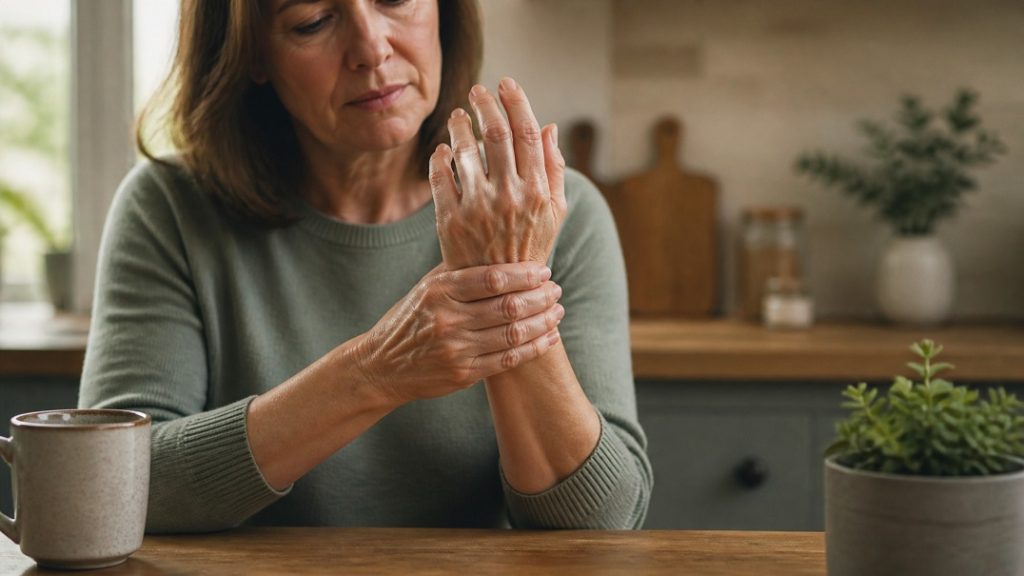
Achy knees on stairs you used to take without thinking. Stiff hands in the morning that loosen up by mid-morning. A shoulder that suddenly complains about a movement it never used to notice. If joint pain has shown up somewhere in your body without an obvious injury behind it, perimenopause is a genuinely plausible explanation, not a stretch.
Joint pain rarely gets the attention hot flashes and sleep problems do, even though research suggests it is at least as common. Understanding why it happens, and what is and is not well understood about it, can make it easier to know what is actually worth trying.
Key Takeaways
- Musculoskeletal pain affects a large majority of women during the menopausal transition, with research estimates ranging from about 65 to 71 percent.
- Estrogen receptors are present throughout joint tissue, including cartilage, synovium, ligaments, and tendons, giving declining estrogen a direct biological pathway to affect joints.
- Menopausal joint pain is not a formal diagnosis on its own, and it overlaps significantly with osteoarthritis and other conditions that need to be ruled out.
- Hormone therapy has shown a modest, real benefit for joint symptoms in large studies, though it is not typically prescribed for joint pain alone.
How Common Is Joint Pain During Perimenopause
A systematic review and meta-analysis of over 5,800 women found that the overall prevalence of musculoskeletal pain among perimenopausal women was 71 percent, with perimenopausal women showing significantly higher odds of this pain compared to premenopausal women. A more recent 2024 review in the journal Climacteric found a similar pattern, reporting that more than 70 percent of women experience musculoskeletal symptoms during the menopause transition, and roughly a quarter are disabled by them to some degree. Whatever the exact number in any given study, the pattern is consistent: this is one of the most common, and most under-discussed, symptoms of this life stage.
Why Estrogen Decline Affects Your Joints
This is not a vague, catch-all explanation. There is a specific biological reason estrogen and joint health are connected.
Estrogen Receptors Are Everywhere in Your Joints
Cartilage, the synovium lining your joints, ligaments, and tendons all contain estrogen receptors, meaning these tissues are built to respond directly to estrogen levels. Research on knee osteoarthritis pain specifically has found that estrogen affects joint tissue through multiple pathways, including regulating inflammatory responses and influencing the health of the cells that maintain cartilage.
What Happens When Estrogen Drops
As estrogen becomes erratic and then declines during perimenopause, joint tissues lose a layer of support they relied on. A review on this topic notes that the prevalence of arthralgia does appear to increase with the menopausal transition and is thought to result from reduced estrogen levels, affecting sex hormone interactions with pain processing pathways, immune cells, and the cells responsible for cartilage maintenance. In practical terms, this can mean more inflammation, less cartilage resilience, and joints that feel stiffer and more reactive than they used to.

It Is Not Always Simple to Diagnose
Here is an important honesty check: menopausal joint pain is not a formal medical diagnosis on its own. It overlaps heavily with other conditions, particularly osteoarthritis, which also becomes more common with age and shares many of the same symptoms. Research has also noted that menopausal joint pain is sometimes mistaken for rheumatoid arthritis, since both can cause morning stiffness and multiple achy joints, which is part of why getting properly evaluated matters rather than assuming the cause without a workup.
What Helps
A few approaches have reasonable evidence behind them, and most women benefit from combining more than one.
Movement and Strength
Staying active and maintaining muscle strength around your joints is one of the most consistently supported approaches for joint health at this life stage, since stronger surrounding muscles reduce the load your joints have to absorb on their own.
Nutritional Support
Omega-3 fatty acids have research behind them for joint-related inflammation, particularly for certain types of joint pain, and are worth understanding in more depth.
Hormone Therapy
Large studies, including the Women’s Health Initiative, have found that women using estrogen therapy report somewhat less joint pain than those who are not, though the effect is modest and hormone therapy is not typically prescribed for joint pain alone. It is a reasonable factor to bring up with a doctor if hormone therapy is already being considered for other symptoms.
When to See a Doctor
New joint pain is worth a proper evaluation, especially if it is symmetric across both sides of the body, involves visible swelling, or is accompanied by significant morning stiffness lasting more than 30 minutes, since these patterns can suggest an inflammatory condition that needs different treatment than typical menopause-related joint aches. A doctor can help sort out what is genuinely hormone-related and what may need separate attention.
Frequently Asked Questions
Is Joint Pain Really a Menopause Symptom, or Just Aging?
Research supports both being true at once. Joint pain does increase with normal aging, but studies have found a specific rise in musculoskeletal pain tied to the menopausal transition itself, above and beyond what age alone would predict, with estrogen receptors in joint tissue offering a plausible biological explanation.
Which Joints Are Most Commonly Affected?
Research points to the knees, hands, hips, and shoulders as commonly affected areas, though this can vary considerably between individual women.
Does Hormone Therapy Fix Joint Pain?
Large studies have found a modest reduction in joint pain among women using estrogen therapy compared to those who are not, but the effect is not dramatic, and hormone therapy is not generally prescribed for joint pain as a standalone reason.
Selected Sources
- Musculoskeletal Pain During the Menopausal Transition: A Systematic Review and Meta-Analysis, National Library of Medicine
- The Musculoskeletal Syndrome of Menopause, Climacteric
- Menopausal Arthralgia: Fact or Fiction, PubMed
This article is for general educational purposes and is not a substitute for personalized medical advice. Talk with a qualified healthcare provider about symptoms and treatment options specific to you.