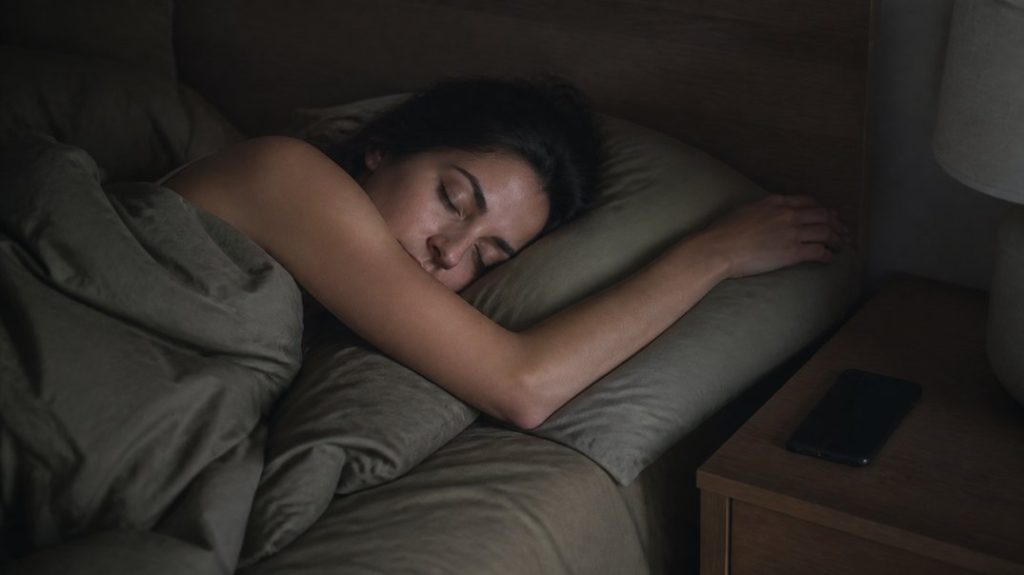
If you used to fall asleep easily and now find yourself wide awake at 3 a.m. for no clear reason, you are not imagining it and you are not alone. Sleep trouble is one of the most common complaints during perimenopause, and for many women it shows up years before hot flashes or missed periods make the transition obvious.
The frustrating part is how often this gets brushed off as ordinary stress or “just getting older.” It is more specific than that. Researchers have a fairly good understanding of why hormonal shifts disrupt sleep during this stage of life, and there are habits and nutrients with real evidence behind them, not just wellness trends.
Key Takeaways
- Sleep complaints affect a large share of women during perimenopause, independent of age alone.
- Falling and fluctuating estrogen and progesterone levels affect the brain systems that regulate sleep, not only hot flashes.
- Many women experience disrupted sleep even without night sweats.
- Sleep habits and specific nutrients each have some research support, and they tend to work best together.
How Common Are Sleep Problems During Perimenopause
Sleep complaints rise sharply during the menopausal transition, and researchers have been tracking this for years. At the 2022 North American Menopause Society conference, sleep researcher Dr. Phyllis Zee reported that estimates of sleep problems during perimenopause and menopause range from roughly a quarter to three quarters of women, with around 40 percent reporting symptoms that meet the definition of insomnia.
A more recent review of the research found something worth sitting with: perimenopause affects 80 to 90 percent of women in some form, and new or worsening sleep disturbance is one of the most frequently reported symptoms of the transition, alongside hot flashes and mood changes. In other words, if your sleep has changed and you cannot point to an obvious reason, perimenopause is a genuinely likely explanation, not a stretch.
Why Perimenopause Disrupts Sleep
Sleep is not a single switch that flips on and off at night. It is regulated by several overlapping systems in the brain and body, and two of the hormones involved, estrogen and progesterone, happen to be the same ones that rise and fall unpredictably during perimenopause before eventually declining.
The Hormonal Shift Behind It
Progesterone has a mild calming effect on the brain, largely through its influence on a calming brain chemical called GABA. As progesterone production becomes erratic during perimenopause, that natural calming effect becomes less reliable from month to month, which can make it harder to fall asleep or to fall back asleep after waking.
Estrogen plays a different but related role. It helps regulate body temperature and influences the internal clock that governs your sleep-wake cycle. As estrogen levels become unpredictable, both of those systems can become less stable, which is part of why declining estrogen is linked to both night sweats and lighter, more easily interrupted sleep, even on nights that feel otherwise calm.
It Is Not Only About Night Sweats
Night sweats get most of the attention because they are so noticeable, but they are not the whole story. Research on perimenopausal sleep points to fragmented, lighter sleep even on nights without one. Anxiety, a racing mind at bedtime, and a lower tolerance for everyday stress during this transition all play a role, and they can disrupt sleep on their own, independent of temperature.
What Actually Helps With Perimenopause Sleep Problems
There is no single fix here, and anyone who promises one is oversimplifying. That said, a few approaches have consistent evidence behind them, and the best results tend to come from combining a couple of these rather than relying on just one.
Habits That Make a Real Difference
Keeping a consistent wake time, even on weekends, tends to help perimenopausal sleep more than a strict bedtime does, because it helps stabilize the internal clock that hormonal shifts are already disrupting. A cool, dark bedroom matters more during this stage of life than it did in your twenties or thirties, since a lower tolerance for heat can make you more sensitive to a warm room. Limiting alcohol in the evening is also worth trying. It can seem to help you fall asleep faster, but it tends to worsen night sweats and fragment sleep in the second half of the night.

Nutrients With Some Evidence Behind Them
Magnesium is the nutrient most consistently studied for sleep. A systematic review and meta-analysis of oral magnesium supplementation found that participants fell asleep about 17 minutes faster on average compared to a placebo, though the review’s authors noted that study quality varied and larger, longer trials are still needed. Other research on magnesium and sleep has found a similar pattern: a meaningful association in observational studies, with more mixed results in controlled trials. That is a reasonable, honest summary of where the science stands, not a guarantee, but it is enough evidence to make magnesium a sensible, low-risk place to start.
| Approach | Best For | Evidence Strength |
|---|---|---|
| Consistent wake time | Overall sleep rhythm | Strong |
| Cooler bedroom | Night sweats and light sleep | Strong |
| Reduced evening alcohol | Sleep fragmentation | Moderate |
| Magnesium | Falling asleep faster | Moderate, mixed trial quality |
When to Talk to a Doctor About Perimenopause Sleep Issues
If poor sleep is affecting your daily functioning, your mood, or your safety, drowsy driving being the clearest example, it is worth bringing up with a doctor rather than managing it alone. Hormone therapy, prescription options, and a referral for a sleep study are all reasonable things to discuss. Needing more support than habits and supplements alone can offer is not a sign that you did not try hard enough.
Frequently Asked Questions
Is Waking Up at 3 a.m. a Normal Part of Perimenopause?
Yes. Fragmented sleep, including waking in the early hours and struggling to fall back asleep, is one of the most commonly reported sleep changes during perimenopause, even among women who do not have frequent night sweats.
Can Magnesium Really Help With Perimenopause Sleep?
There is moderate evidence for it. A meta-analysis of clinical trials found people fell asleep faster on average with magnesium supplementation compared to a placebo, though not every study has found a clear benefit. It works best alongside sleep habit changes, not as a stand-alone fix.
Should I See a Doctor for Perimenopause Sleep Problems?
If sleep trouble is affecting your daily life, mood, or safety, yes. A doctor can help rule out other causes and discuss options like hormone therapy or a sleep study that go beyond what habits and supplements alone can offer.
Selected Sources
- Sleep Disturbance and Perimenopause: A Narrative Review, National Library of Medicine
- North American Menopause Society, 2022 conference coverage on insomnia in menopause
- Oral Magnesium Supplementation for Insomnia in Older Adults: A Systematic Review and Meta-Analysis, National Library of Medicine
- The Menopause Society (NAMS)
This article is for general educational purposes and is not a substitute for personalized medical advice. Talk with a qualified healthcare provider about symptoms and treatment options specific to you.