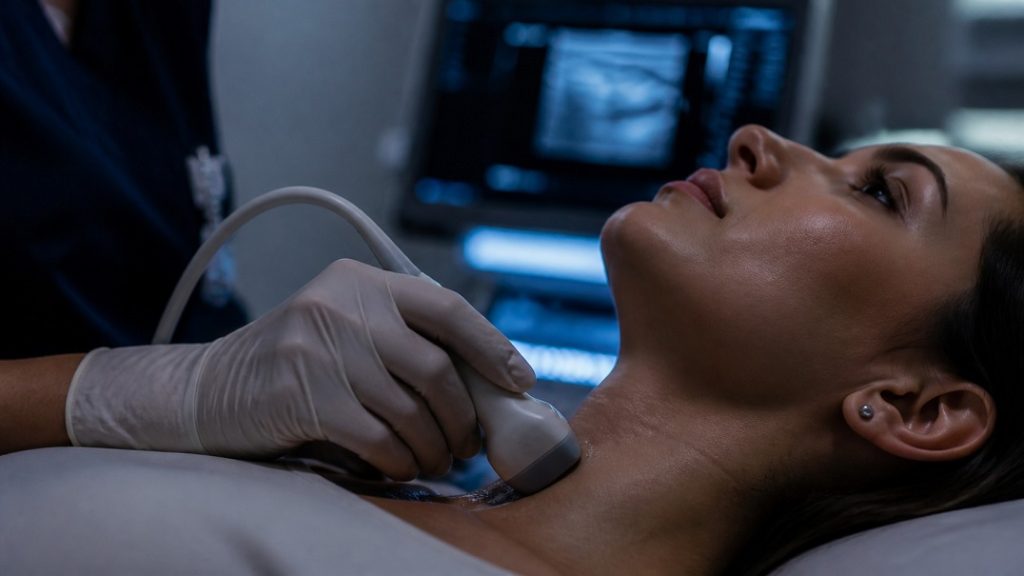
If you have wondered whether your fatigue, weight changes, or brain fog might have a thyroid component, you have probably also noticed that not every source agrees on whether routine testing is worthwhile. That is not you misreading conflicting advice. Major medical organizations genuinely disagree on this point, and it is worth understanding why before deciding what makes sense for you.
Key Takeaways
- The American Thyroid Association recommends thyroid testing starting at age 35 and every five years after that, particularly for women.
- The U.S. Preventive Services Task Force has stated there is not enough evidence to recommend for or against screening people without symptoms.
- Certain risk factors, including a family history of thyroid disease or symptoms suggestive of dysfunction, strengthen the case for testing regardless of which general guideline you follow.
- A TSH test is simple, inexpensive, and low-risk, which is part of why many clinicians test proactively even in the absence of a firm universal recommendation.
Why the Guidelines Disagree
This is genuinely a case where reasonable medical organizations have reached different conclusions, not a case of one source being right and another being wrong.
The Case for Routine Screening
The American Thyroid Association recommends measuring thyroid function in all adults beginning at age 35 and every five years thereafter, noting that more frequent screening may be appropriate for people who are high-risk or symptomatic. This recommendation is described as particularly compelling for women, though it can also be justified in men as a relatively cost-effective part of routine periodic health checkups.
The Case for More Caution
Other organizations take a more conservative stance. A systematic review found that overtreatment with thyroid hormone replacement is a real risk, with roughly one in four patients on levothyroxine unintentionally maintained on a dose sufficient to fully suppress TSH, and that over-suppression has been linked to an increased risk of atrial fibrillation in some analyses. This is part of why the U.S. Preventive Services Task Force has not endorsed universal screening for people without symptoms, citing insufficient evidence that screening asymptomatic adults improves health outcomes overall.
Where Perimenopause Fits Into This Debate
Even organizations that are cautious about universal screening tend to make an exception for the years surrounding perimenopause and menopause. One task force specifically recommends maintaining a high index of suspicion for nonspecific symptoms consistent with hypothyroidism when examining perimenopausal and postmenopausal women, acknowledging that this life stage carries its own reasons for a lower testing threshold.

Factors That Make Testing More Clearly Worthwhile
Regardless of which general guideline you find most persuasive, certain personal factors shift the balance more firmly toward testing.
| Factor | Why It Matters |
|---|---|
| Family history of thyroid disease | Increases baseline risk independent of age |
| Symptoms like fatigue, cold intolerance, or unexplained weight change | Directly suggestive of possible dysfunction |
| Age 35 or older | Meets the ATA’s general screening threshold |
| Currently in perimenopause or menopause | Overlapping symptoms make self-assessment unreliable |
| Personal history of autoimmune conditions | Thyroid autoimmunity often clusters with other autoimmune disease |
What the Test Itself Involves
A TSH blood test is a standard, low-risk part of routine bloodwork, typically drawn alongside other common labs during an annual physical. There is no special preparation required, and results are usually available within a few days. If your result falls outside the normal range, your doctor will typically follow up with additional testing, such as free T4 or thyroid antibodies, to clarify the picture before recommending treatment.
What Happens If Your Result Is Borderline
A single mildly elevated TSH reading does not automatically mean you need treatment. Because TSH can fluctuate with illness, time of day, and other temporary factors, many clinicians recommend repeating the test weeks or months later before drawing firm conclusions, particularly when the initial result is only slightly outside the normal range. This is a reasonable, cautious approach that avoids starting unnecessary treatment based on a single data point.
Making the Decision for Yourself
Given the low cost and low risk of a single TSH test, many clinicians lean toward testing proactively during this life stage even without a universal consensus recommendation, particularly given how much symptom overlap exists between perimenopause and thyroid dysfunction. If you are experiencing fatigue, weight changes, mood shifts, or temperature sensitivity and have not been tested recently, bringing it up at your next appointment is a reasonable, low-stakes step.
It can help to write down your specific symptoms and roughly when they started before your appointment. A doctor deciding whether to test, and how urgently, often relies as much on the pattern and timeline you describe as on any single guideline, so a clear, specific account of what you have been experiencing is genuinely useful information.
Frequently Asked Questions
Do I Need to Fast Before a Thyroid Test?
Generally no. TSH testing does not typically require fasting, though your doctor may ask you to fast if other labs are being drawn at the same time.
How Often Should I Get Retested If My First Result Is Normal?
The American Thyroid Association’s general guideline suggests every five years for adults without symptoms or risk factors, though your doctor may recommend more frequent testing based on your individual history and symptoms.
Is It Worth Testing If I Don’t Have Obvious Symptoms?
This is genuinely debated among medical organizations. Given the low cost and low risk of the test itself, many clinicians consider it reasonable to test during perimenopause even without dramatic symptoms, since early-stage thyroid dysfunction can be subtle.
Selected Sources
- Annals of Internal Medicine: Screening for Thyroid Disease, USPSTF Recommendation Statement
- American Academy of Family Physicians: Screening for Thyroid Disease
- American Thyroid Association Guidelines for Detection of Thyroid Dysfunction
This article is for general educational purposes and is not a substitute for personalized medical advice. Talk with a qualified healthcare provider about symptoms and treatment options specific to you.