
Iron is one of the few supplement categories where the cheapest, most common option and the best-tolerated option are genuinely different products, and knowing that difference before you buy can save you months of stomach upset and a supplement you eventually abandon. This guide compares the main iron forms, what dose actually makes sense, and one important safety note worth knowing before you start.
Key Takeaways
- Ferrous sulfate is the cheapest, most researched iron form, but causes GI side effects severe enough that 30 to 50 percent of people stop taking it.
- Iron bisglycinate is a chelated form that achieves comparable or better absorption at a lower elemental dose, with significantly fewer digestive side effects.
- Iron should generally not be taken as a guess. Testing ferritin first confirms whether you actually need it and at what dose.
- Dark or black stool is an expected, harmless effect of oral iron, but it can mask a more serious sign, gastrointestinal bleeding, so any accompanying dizziness or weakness needs medical attention.
What to Look For
Get Tested Before You Guess
Iron is not a supplement to add reflexively just because you’re tired. Confirming an actual deficiency with a ferritin blood test, ideally alongside a broader iron panel, tells you both whether supplementation is warranted and roughly what dose is appropriate, rather than guessing based on fatigue alone, which has several other possible causes.
Elemental Iron Is the Number That Matters
A supplement’s total tablet weight isn’t the relevant figure, the elemental iron content is. Ferrous sulfate tablets typically provide about 65 milligrams of elemental iron from a 325 milligram tablet, while bisglycinate products vary but often deliver meaningful absorption at considerably lower elemental doses, commonly in the 18 to 27 milligram range.
How the Main Forms Compare
| Form | Elemental Iron (typical) | Absorption | GI Tolerability | Cost |
|---|---|---|---|---|
| Ferrous sulfate | ~65 mg per 325 mg tablet | Well-established, but food and other supplements reduce it | Poor, 30-50% discontinue due to side effects | Low |
| Iron bisglycinate (chelated) | 18-27 mg typical | Comparable or superior to sulfate at lower doses | Significantly better, fewer GI complaints | Moderate to higher |
Why Bisglycinate Tends to Be the Better Starting Point
The chelation process in bisglycinate, iron bound to an amino acid, protects it from some of the dietary factors that interfere with sulfate’s absorption, and it produces markedly less free iron reacting with the gut lining, which is the main source of the nausea, constipation, and cramping that cause so many people to abandon ferrous sulfate. For someone specifically trying to sustain supplementation long enough to actually rebuild iron stores, tolerability isn’t a minor detail, it’s often the difference between a treatment that works and one that gets abandoned after two weeks.
When the Cheaper Option Still Makes Sense
If you’ve taken ferrous sulfate before without significant side effects, there’s little reason to pay a premium for bisglycinate. And for more severe, medically supervised deficiency requiring rapid correction, standard-dose ferrous sulfate remains a reasonable, well-studied protocol.
Our Recommendation
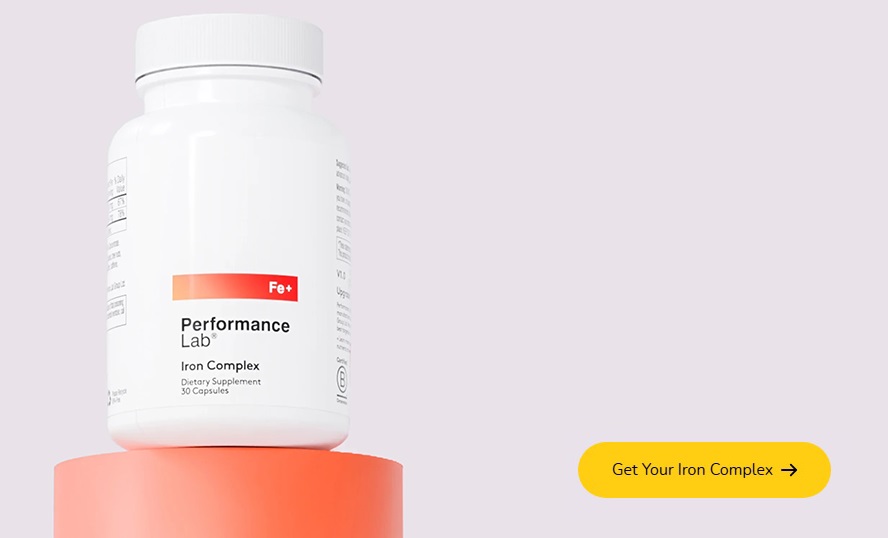
Given how commonly ferrous sulfate’s side effects derail consistent use, Performance Lab Iron Complex is the option we point readers toward, formulated with a gentler, well-absorbed iron form intended to support consistent daily use rather than a dose so harsh it ends up sitting unused in a cabinet after a week.
An Important Safety Note
Dark or black stool is a normal, harmless effect of oral iron supplementation and isn’t a cause for concern on its own. However, it’s worth knowing that this same symptom can also indicate gastrointestinal bleeding, so if dark stool appears alongside dizziness, unusual weakness, or a known drop in hemoglobin, that combination warrants prompt medical attention rather than being assumed to be a routine iron side effect.
When You Might Want Something Different
If you’re postmenopausal and haven’t had a documented deficiency confirmed by bloodwork, you likely don’t need iron supplementation at all, since iron needs drop substantially once menstruation stops, and unnecessary supplementation isn’t simply neutral.
Frequently Asked Questions
Do I Need a Blood Test Before Taking Iron?
Ideally yes. Confirming an actual deficiency with a ferritin test tells you whether iron is even the right intervention and helps guide appropriate dosing, rather than supplementing based on fatigue alone.
Why Did Iron Give Me Constipation?
This is a common effect, particularly with ferrous sulfate, affecting roughly 30 to 50 percent of users significantly enough to cause many to stop taking it. Switching to a bisglycinate form often resolves this while maintaining effective absorption.
Is Dark Stool From Iron Dangerous?
On its own, no, it’s an expected and harmless effect. But because dark, tarry stool can also indicate gastrointestinal bleeding, any occurrence alongside dizziness, unusual weakness, or a falling hemoglobin level should be evaluated by a doctor.
Selected Sources
- Iron Bisglycinate vs Ferrous Sulfate: Which Is Better?
- Best Iron Supplements for Women: Forms, Dosing, and How to Avoid Side Effects
This article is for general educational purposes and is not a substitute for personalized medical advice. Talk with a qualified healthcare provider about symptoms and treatment options specific to you.