
Omega-3 is one of the more crowded supplement categories, and it’s also one where the front-of-label numbers can be genuinely misleading. A bottle that says “1,200 mg fish oil” isn’t telling you how much EPA and DHA, the actual active compounds, you’re getting. Understanding a handful of specific label details will do more for your purchase decision than comparing brand names.
Key Takeaways
- What matters is the combined EPA and DHA content specifically, not the total fish oil or omega-3 number on the front of the label.
- Triglyceride and re-esterified triglyceride forms absorb meaningfully better than the cheaper ethyl ester form, roughly 70 percent better in direct comparisons.
- Algae oil is a genuinely equivalent option for vegetarians and vegans, not a compromise, since it’s the original source fish get their omega-3s from.
- Third-party testing matters more in this category than most, since fish oil is prone to oxidation and heavy metal contamination.
What to Look For
Check EPA and DHA, Not Just “Fish Oil”
This is the single most important label-reading habit for this category. A supplement might list 1,000 milligrams of fish oil on the front while providing considerably less than that in actual EPA and DHA, the two fatty acids responsible for the evidence-backed benefits. Always look at the Supplement Facts panel for the specific EPA and DHA amounts rather than relying on the front label’s total.
Choose the Right Form
Omega-3s come in a few different molecular forms, and they are not interchangeable in terms of absorption. Triglyceride and re-esterified triglyceride forms are absorbed roughly 70 percent better than the cheaper, more common ethyl ester form. If a label doesn’t specify the form at all, it’s almost certainly ethyl ester, since that’s the least expensive to produce.
Freshness and Third-Party Testing
Fish oil is genuinely prone to oxidation, going rancid, and to heavy metal contamination, and industry data suggests a majority of commercial fish oil products may exceed recommended oxidation limits. Third-party certifications like IFOS, USP Verified, or NSF Certified for Sport confirm both purity and that the label’s claimed content is accurate.
How the Main Sources Compare
| Source | Form | Best For | Notes |
|---|---|---|---|
| Fish oil | Triglyceride or ethyl ester | Most people, most cost-effective per mg EPA+DHA | Most researched, widest range of quality |
| Algae oil | Triglyceride | Vegetarians, vegans, or anyone avoiding fish | Bioequivalent to fish oil, usually more capsules needed |
| Krill oil | Phospholipid | Smaller capsules, less fishy aftertaste | Lower EPA+DHA per capsule, higher cost per mg |
Algae Oil Is a Genuine Equivalent, Not a Compromise
It’s worth being direct about this, since algae oil sometimes gets framed as a lesser substitute. Fish get their omega-3s from algae in the first place, and algae-derived DHA and EPA have been shown to be bioequivalent to fish-sourced omega-3s. The main practical trade-off is that you typically need more capsules to hit the same EPA and DHA total, not that the source itself is inferior.
How Much You Actually Need
For general wellness purposes, a combined EPA and DHA intake in the range of 250 to 500 milligrams daily is a reasonable practical target, though higher doses are sometimes used for specific goals under medical guidance. Given that a large share of adults worldwide fall short of recommended omega-3 intake, largely due to low seafood consumption, closing this gap is a genuinely useful default for most people, regardless of which specific symptom brought you to this page.
Our Recommendation
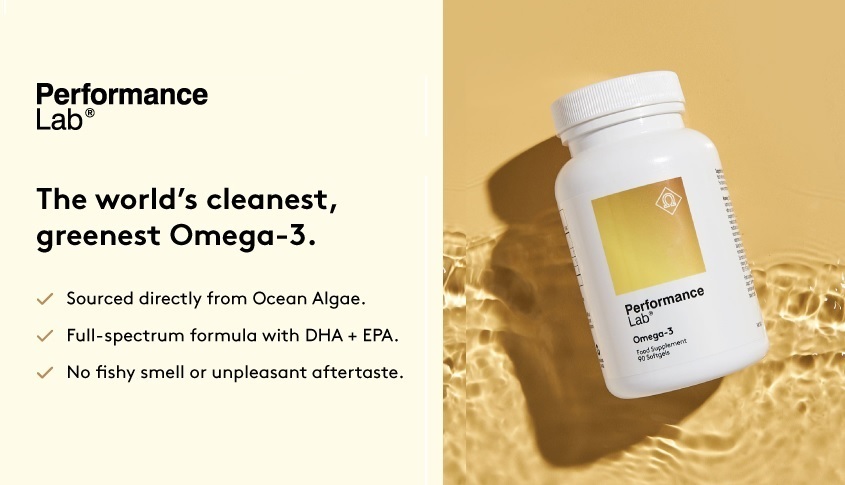
Given the absorption advantage of triglyceride-form omega-3 and the importance of third-party verified purity in this specific category, Performance Lab Omega-3 is the option we point readers toward. It’s formulated in a well-absorbed form with EPA and DHA clearly disclosed rather than buried behind a vague total.
When You Might Want Something Different
If you’re vegetarian or vegan, or simply prefer to avoid fish-derived products, an algae-based omega-3 is a genuinely equivalent choice rather than a downgrade, you’ll just want to check the EPA and DHA totals carefully since capsule counts tend to be higher. And if you’re specifically managing high triglycerides under medical supervision, your doctor may recommend a concentrated, higher-dose prescription formulation rather than an over-the-counter supplement.
Frequently Asked Questions
Is Fish Oil or Algae Oil Better?
Neither is inherently better. They’re bioequivalent in terms of EPA and DHA absorption. Fish oil tends to be more cost-effective per milligram, while algae oil is the appropriate choice if you’re vegetarian, vegan, or prefer to avoid fish products.
Why Does the Form (Triglyceride vs. Ethyl Ester) Matter So Much?
Triglyceride and re-esterified triglyceride forms are absorbed significantly better than ethyl ester, roughly 70 percent better in direct research comparisons, meaning you get more usable EPA and DHA from the same labeled dose.
How Do I Know If My Fish Oil Has Gone Rancid?
A high-quality, fresh fish oil should have a mild sea scent rather than a sharp, fishy or rancid smell. If capsules smell strongly rancid, that’s a sign of oxidation, and third-party testing certifications are the more reliable way to confirm freshness before you notice a problem.
Selected Sources
- How to Choose an Omega-3 Supplement: A Pharmacist’s Guide
- Which Omega-3 Capsules Are the Best? Expert-Backed Buyer’s Guide
This article is for general educational purposes and is not a substitute for personalized medical advice. Talk with a qualified healthcare provider about symptoms and treatment options specific to you.