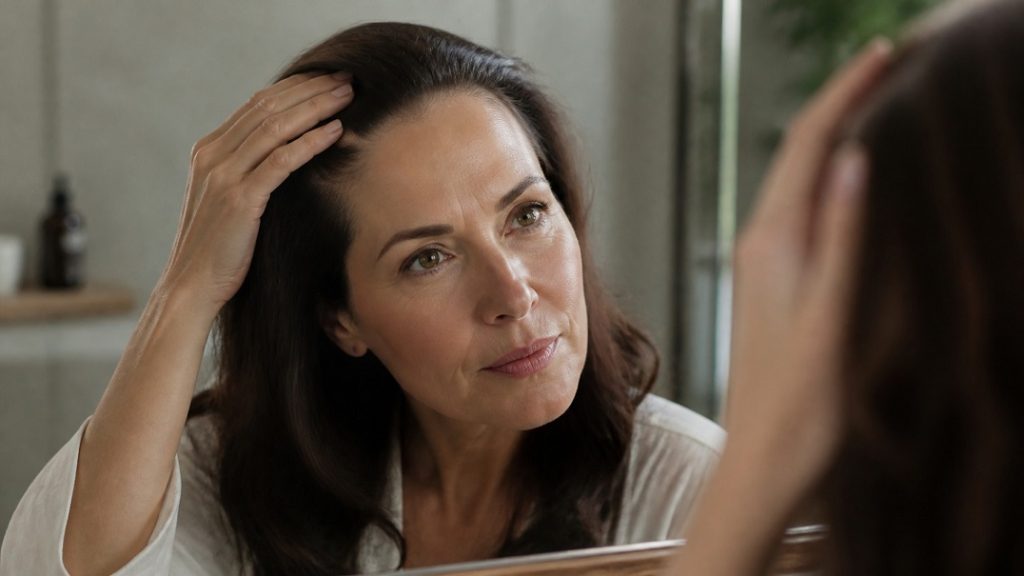
If your ponytail feels thinner than it used to, or you are seeing more scalp through your part in photos, you are noticing something real. Hair changes are one of the more common and least discussed symptoms of the menopause transition, and they can start years before periods become irregular.
Unlike a hot flash, hair thinning does not announce itself in a single dramatic moment. It builds slowly, which makes it easy to dismiss at first and unsettling once you finally notice how much has changed. Understanding what is actually happening in your hair follicles can make the process feel less random and more manageable.
Key Takeaways
- Hair thinning in perimenopause usually comes from a mix of two things: declining estrogen and progesterone, and a relative increase in the influence of androgens on the scalp.
- Two distinct patterns can occur, gradual diffuse thinning from hormonal shifts and sudden, heavier shedding from telogen effluvium, often triggered by stress.
- Nutritional gaps, especially in iron, zinc, and protein, can make either pattern worse and are worth ruling out with a doctor.
- Treatment works best when it addresses more than one cause at once rather than relying on a single product.
Why Hormones Affect Hair During This Transition
Hair follicles are hormone-sensitive tissue, which means they respond to the same hormonal shifts driving other perimenopause symptoms. Estrogen tends to support a longer active growth phase for hair, called anagen, and its decline shortens that phase. At the same time, androgens like testosterone do not necessarily rise, but their relative influence on the scalp increases as estrogen drops.
The Role of Androgens
In genetically susceptible hair follicles, an enzyme called 5-alpha reductase converts testosterone into a more potent form, dihydrotestosterone (DHT). DHT gradually shrinks, or miniaturizes, certain follicles over time, causing hairs to grow back finer and shorter with each cycle. This process, known as female pattern hair loss or androgenetic alopecia, affects the crown and part line more than the hairline and can affect nearly half of women to some degree, with earlier onset generally seen in men than women.
Estrogen’s Direct Role
Separately from androgen sensitivity, the drop in ovarian estrogen production during this transition directly affects hair follicles, since hair follicle tissue is itself estrogen-sensitive, leading to changes in hair density, thickness, and texture. This is part of why hair thinning in perimenopause often shows up as an overall reduction in density and hair diameter rather than distinct bald patches.

When It Is Sudden Shedding Instead of Gradual Thinning
Not all perimenopause hair loss looks the same. A second, distinct pattern called telogen effluvium involves a much larger and more sudden increase in shedding, often noticed in the shower or on a pillow.
What Triggers Telogen Effluvium
Hair grows in cycles: an active growth phase, a short transitional phase, and a resting phase before the hair sheds. Normally only about 10 to 15 percent of scalp hair is in the resting phase at any time. A significant stressor, including a hormonal shift, can push far more hair into that resting phase at once. Roughly two to three months later, up to 70 percent of hair that was actively growing can shift into the resting phase together, leading to a wave of shedding that feels alarming but is usually temporary.
The reassuring part is that telogen effluvium tends to resolve within three to six months once the underlying trigger settles, unlike the slower, more permanent pattern of androgenetic alopecia.
Nutritional Factors Worth Ruling Out
Hair follicles are metabolically demanding tissue, and they are often among the first places the body cuts corners when nutrients run short. Deficiencies in nutrients such as iron, B vitamins, vitamin D, zinc, and protein can lower the body’s tolerance for stress and contribute to increased shedding. This does not mean every case of thinning hair is a deficiency issue, but it is a reasonable and inexpensive thing to check with a blood panel before assuming the cause is purely hormonal.
Thyroid Function
Thyroid hormones also influence the hair growth cycle, and both an underactive and an overactive thyroid can contribute to diffuse shedding. Because thyroid changes become more common in the same age range as perimenopause, a thyroid panel is a reasonable step if hair thinning is accompanied by fatigue, weight changes, or temperature sensitivity.
| Pattern | Typical Onset | Course |
|---|---|---|
| Androgenetic alopecia (female pattern) | Gradual, over years | Progressive without treatment |
| Telogen effluvium | Sudden, 2 to 3 months after a trigger | Usually resolves in 3 to 6 months |
| Nutritional or thyroid-related shedding | Variable | Improves once underlying issue is corrected |
What Actually Helps
Because there are multiple contributing causes, the most effective approach usually combines more than one strategy rather than relying on a single fix.
Medical and Topical Options
Topical minoxidil remains the most consistently studied over-the-counter treatment for pattern hair loss in women, with clinical trial data supporting improved hair density over several months of daily use. Hormone therapy is sometimes discussed with a doctor as well, though its effects on hair specifically are less robustly studied than its effects on hot flashes or bone density.
Nutritional Support
Correcting a genuine iron, zinc, or vitamin D deficiency, when one exists, can meaningfully improve shedding related to telogen effluvium. A broad, well-formulated multivitamin can help close common nutritional gaps, though it works best as a foundation alongside medical evaluation rather than a stand-alone treatment for pattern hair loss.
Frequently Asked Questions
Is Hair Thinning a Normal Part of Perimenopause?
Yes, some degree of hair thinning is common during this transition due to declining estrogen and the relative increase in androgen influence on the scalp. That said, sudden or severe shedding is worth discussing with a doctor rather than assuming it will resolve on its own.
How Long Does Perimenopause Hair Shedding Last?
It depends on the cause. Shedding related to a temporary stressor, known as telogen effluvium, typically improves within three to six months. Gradual thinning from androgenetic alopecia tends to progress slowly over years without intervention.
Should I See a Doctor About Hair Thinning?
If shedding is sudden, heavy, or accompanied by other symptoms like fatigue or scalp irritation, yes. A doctor can check for thyroid dysfunction, iron deficiency, and other treatable causes before you assume the cause is purely hormonal aging.
Selected Sources
- National Institutes of Health: The Genetic Landscape of Androgenetic Alopecia
- PubMed: Menopause and Hair Loss in Women, Exploring the Hormonal Transition
- International Society of Hair Restoration Surgery: Telogen Effluvium
- Cleveland Clinic: Telogen Effluvium
This article is for general educational purposes and is not a substitute for personalized medical advice. Talk with a qualified healthcare provider about symptoms and treatment options specific to you.