
Zinc supplement marketing frequently presents picolinate as the definitively “best absorbed” form, and it’s worth knowing that this claim rests on thinner evidence than the confidence behind it suggests. This guide walks through what the research on zinc forms actually shows, including where it’s genuinely mixed, and one safety consideration that matters more than the form debate itself.
Key Takeaways
- Zinc picolinate’s reputation as the best-absorbed form comes largely from a single small 1987 study that has never been replicated at scale.
- More recent isotope-tracer research suggests citrate and gluconate absorb comparably, or in some analyses slightly better, than picolinate.
- Zinc bisglycinate, citrate, and gluconate are all reasonable, well-absorbed everyday choices. Zinc oxide is the one form worth actively avoiding for supplementation.
- The tolerable upper limit is 40 milligrams of elemental zinc daily from food and supplements combined, and sustained intake above this can cause copper deficiency.
What to Look For
Don’t Assume Picolinate Is Automatically Superior
This is worth being honest about rather than repeating uncritically. The claim that zinc picolinate is the best-absorbed form traces back largely to a small 1987 study with just 15 participants, one that found picolinate produced greater increases in hair, urine, and red blood cell zinc than gluconate or citrate. It’s a frequently cited study, but it’s also small, old, and hasn’t been robustly replicated. More recent isotope-tracer research has found citrate and gluconate absorbing at comparable or even somewhat higher rates than picolinate. The honest summary is that picolinate is a fine choice, not a clearly proven winner.
Focus on Elemental Zinc, Not Total Compound Weight
As with the other minerals covered on this site, check the Supplement Facts panel for elemental zinc specifically, not the total weight of the zinc compound.
How the Main Forms Compare
| Form | Absorption | Best For | Notes |
|---|---|---|---|
| Zinc bisglycinate | Well absorbed, gentle | Everyday use, sensitive stomachs | Chelated with glycine, comparable to picolinate |
| Zinc citrate | Well absorbed | Everyday use | Comparable absorption in recent research |
| Zinc gluconate | Well absorbed as a supplement; strongest evidence in lozenge form for colds | Everyday use, short-term cold relief (as a lozenge) | Affordable and widely available |
| Zinc picolinate | Good, but not proven superior | Everyday use | Popular reputation exceeds the actual evidence |
| Zinc oxide | Poor, roughly 50% less absorbed than citrate/gluconate | Avoid for supplementation | Common in budget multivitamins |
The Copper Balance Issue
This matters more than the form debate above. Zinc and copper compete for the same intestinal transport pathway, so sustained high zinc intake can crowd out copper absorption over time, potentially leading to copper deficiency, anemia, and nerve-related symptoms. The tolerable upper limit is 40 milligrams of elemental zinc daily from all combined sources, and long-term intake above roughly 25 to 40 milligrams daily should generally include some copper or be done under a clinician’s guidance.
Our Recommendation
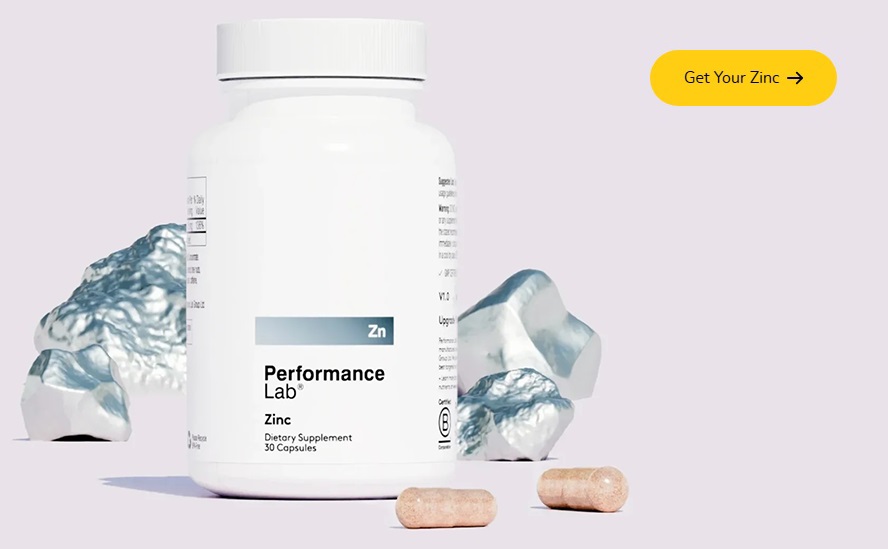
Given that the evidence doesn’t clearly single out one chelated form as superior, we recommend prioritizing a well-absorbed, gentle form dosed sensibly with copper balance in mind, rather than chasing the picolinate marketing claim specifically. Performance Lab Zinc is the option we point readers toward, formulated at a reasonable daily dose without the unsupervised megadoses that raise copper depletion concerns.
When You Might Want Something Different
If you’re specifically looking for cold symptom relief rather than general daily supplementation, a zinc acetate or gluconate lozenge, not a swallowed capsule, has the strongest clinical support for that particular use, at considerably higher short-term doses than you’d use for general daily supplementation. And as covered in more depth in our article on zinc and hair health specifically, the evidence for zinc supplementation improving hair loss is strongest in people with a documented deficiency, not as a universal fix regardless of your actual zinc status.
Frequently Asked Questions
Is Zinc Picolinate Really the Best Form?
Its reputation is stronger than the underlying evidence. The claim traces largely to one small, older study, and more recent research suggests citrate and gluconate absorb comparably. Any of the well-absorbed chelated or citrate forms are reasonable choices.
Can Taking Zinc Cause a Copper Deficiency?
Yes, with sustained high intake. Zinc and copper compete for the same absorption pathway, so consistently taking more than roughly 25 to 40 milligrams of elemental zinc daily over a long period can lead to copper deficiency, which is why co-supplementing with copper or staying within the recommended range matters.
Will Zinc Definitely Help My Hair Loss?
Not necessarily. The strongest evidence for zinc supplementation improving hair loss applies to people with an actual documented deficiency. In people with normal zinc levels, the evidence for hair benefit is considerably weaker.
Selected Sources
- Zinc Picolinate vs Zinc Gluconate: Complete Comparison Guide
- Zinc Picolinate vs Citrate, Glycinate, Gluconate: Absorption Compared
This article is for general educational purposes and is not a substitute for personalized medical advice. Talk with a qualified healthcare provider about symptoms and treatment options specific to you.