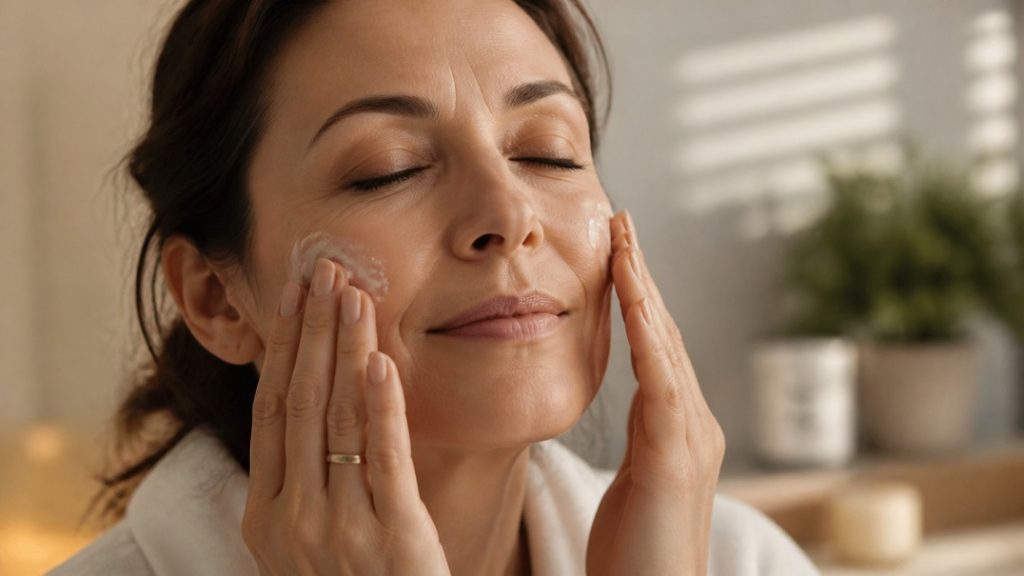
Walk down any supplement aisle and you will find collagen powders promising firmer, more hydrated skin. What you will not find as easily is a clear explanation of how collagen supplements actually work in the body, or how they compare to simply making sure you have the raw materials your skin needs to make its own collagen.
Both approaches have research behind them, and they are not mutually exclusive. Understanding the difference can help you decide where to put your money and your expectations.
Key Takeaways
- Direct collagen supplementation has meta-analysis support for modestly improving skin hydration and elasticity, particularly with consistent use over 8 to 12 weeks or longer.
- Your body cannot use collagen protein directly. It breaks supplemental collagen down into amino acids and peptides, some of which may signal skin cells to produce more collagen on their own.
- A nutrient-based approach supplies cofactors like vitamin C and zinc that your body needs to synthesize its own collagen, whether or not you are also taking collagen directly.
- Neither approach reverses the underlying cause of menopausal collagen loss, which is the decline in estrogen itself.
How Direct Collagen Supplementation Works
When you swallow a scoop of hydrolyzed collagen peptides, your digestive system breaks it down into individual amino acids and small peptide fragments, the same way it breaks down any other dietary protein. Some of those peptide fragments appear to act as signaling molecules that encourage fibroblasts, the skin cells responsible for collagen production, to make more collagen and elastin on their own.
What the Research Shows
The evidence base here is larger than for many supplements. A systematic review and meta-analysis of 26 randomized controlled trials involving 1,721 participants found that hydrolyzed collagen supplementation significantly improved skin hydration and elasticity compared to placebo. A separate review reached a similar conclusion, finding that ingesting hydrolyzed collagen for around 90 days reduced measures of skin aging, including improvements in wrinkles, elasticity, and hydration.
That said, a more recent systematic literature review noted that despite the volume of research, clinical evidence for hydrolyzed collagen’s effects on skin health remains inconsistent across individual trials, with considerable variation in dose, collagen source, and study quality. The overall direction of the evidence favors a modest benefit, but it is not as uniformly strong as marketing sometimes implies.
How a Nutrient-Based Approach Works Differently
Rather than supplying collagen protein directly, a nutrient-based approach focuses on the vitamins and minerals your body needs to manufacture its own collagen from the amino acids already present in a normal diet.
Vitamin C’s Essential Role
Vitamin C is not optional in this process, it is a required cofactor. Collagen synthesis depends on vitamin C for the hydroxylation of proline and lysine, two steps that are essential for forming the stable triple-helix structure of a collagen molecule. Without adequate vitamin C, the body cannot properly assemble collagen even if plenty of amino acid building blocks are available.
Zinc and Other Supporting Nutrients
Zinc also plays a supporting role in collagen synthesis and tissue repair, working alongside vitamin C rather than replacing it. A multivitamin formulated for women’s needs at this life stage typically supplies both nutrients, along with others, such as B vitamins, that support overall skin cell turnover.

Which Approach Makes More Sense
These two strategies are not competing options so much as different layers of support. A nutrient-based approach addresses whether your body has the raw materials and cofactors to make collagen efficiently. Direct collagen supplementation adds finished peptide fragments that may provide an additional signaling effect beyond basic nutrient sufficiency.
Cost and Practicality
Collagen powders tend to cost more per month than a multivitamin and typically require mixing into a drink or food daily, which some people find easy to maintain and others find one more thing to remember. A multivitamin also does more than support skin: the same B vitamins, zinc, and vitamin C involved in collagen synthesis play roles in energy metabolism, immune function, and other systems, so it tends to serve multiple purposes rather than a single cosmetic goal. If budget or simplicity is a factor, starting with a solid nutritional foundation and adding collagen later is a reasonable sequence.
What Neither Approach Fixes
It is worth being direct about a limitation that applies to both. The underlying driver of menopausal skin collagen loss is declining estrogen, and women lose approximately 30 percent of their skin collagen in the first five years after menopause, a loss more closely tied to the duration of estrogen deficiency than to age itself. Neither collagen peptides nor a multivitamin addresses that hormonal mechanism directly. Topical or systemic estrogen therapy is the only intervention shown to meaningfully affect that specific process, and it is a conversation to have with a doctor rather than a supplement decision.
| Approach | What It Provides | Evidence Strength |
|---|---|---|
| Direct collagen peptides | Finished amino acids and signaling peptides | Moderate, some inconsistency across trials |
| Nutrient-based (vitamin C, zinc, multivitamin) | Cofactors for the body’s own collagen synthesis | Strong for the underlying biochemistry, less direct skin-outcome data |
| Topical or systemic estrogen therapy | Addresses the hormonal driver directly | Strongest for the root cause, requires medical guidance |
Frequently Asked Questions
Do I Need Both Collagen and a Multivitamin?
Not necessarily, but they are not redundant either. A multivitamin ensures your body has the cofactors to make its own collagen, while direct collagen supplementation adds peptide fragments some research suggests may independently stimulate collagen production. Many women use both.
How Long Before I’d Notice a Difference From Collagen Supplements?
Most clinical trials showing measurable improvement in skin hydration and elasticity used collagen for at least 8 to 12 weeks, with some studies running as long as 90 days before assessing results. Consistency matters more than any single dose.
Can Nutrition Alone Reverse Menopausal Skin Changes?
No. Nutrition can support the skin’s ability to maintain and repair its own collagen, but it does not replace the estrogen that drives the underlying decline. For significant hormone-driven skin changes, that conversation belongs with a doctor.
Selected Sources
- Nutrients: Effects of Oral Collagen for Skin Anti-Aging, Systematic Review and Meta-Analysis
- European Journal of Clinical Nutrition: Efficacy and Safety of Hydrolyzed Collagen Supplementation on Skin Health Outcomes
- European Medical Journal: Managing Menopausal Skin, A Clinician’s Review
This article is for general educational purposes and is not a substitute for personalized medical advice. Talk with a qualified healthcare provider about symptoms and treatment options specific to you.